Korean Etiquette for Visitors: What K-Dramas Get Right (and What They Don't)
Korean dramas are a surprisingly good etiquette teacher, because so much of Korean social life runs on rules the camera has to show. But they also compress, exaggerate and occasionally invent.
Here’s what actually matters when you’re standing in a Seoul convenience store or a Jeonju guesthouse, sorted by how likely you are to run into it.
Age is grammar, not small talk
The first thing many Koreans want to establish is relative age, and it isn’t nosiness. Korean has multiple speech levels, and the ordinary words for older brother, older sister and friend all depend on who’s older. Until that’s settled, people genuinely don’t know how to talk to you.
As a foreign visitor you’re mostly exempt — people will default to polite forms and won’t expect you to navigate it. But if you’re asked your age within three minutes of meeting someone, now you know why.
What dramas get right: the awkwardness of the question, and the significance of the moment two people agree to drop formal speech.
What they overstate: how much a foreigner is expected to participate in it. Very little.
Shoes off — more often than you’d think
Take your shoes off in homes, temple halls, hanok stays, floor-seating restaurants and some museum rooms. The reason is ondol (온돌), Korea’s underfloor heating: floors are warm, people sit and sleep on them, and they’re treated as clean surfaces rather than ground.
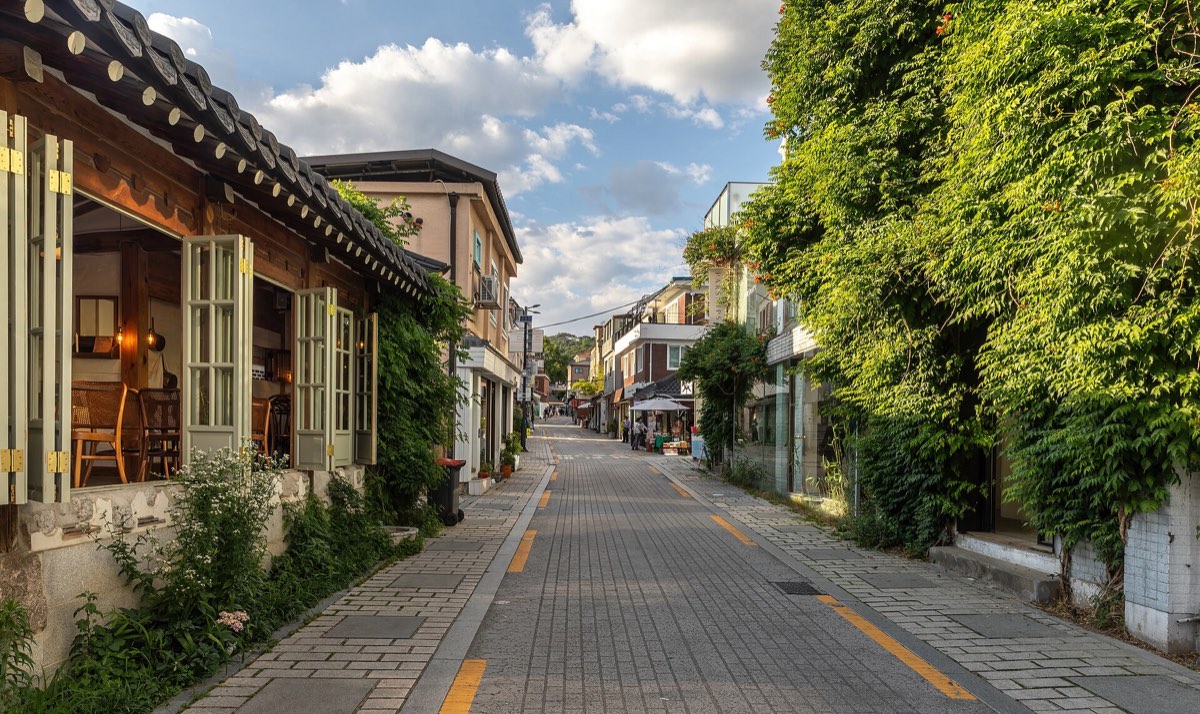
Practical version: look for a step down, a shoe rack, or a pile of other people’s shoes. Wear socks without holes. If you’re visiting hanok neighbourhoods like Bukchon, assume you’ll be taking shoes off at least once.
Two hands, nearly always
Give and receive with two hands: money, a card, a gift, a drink, a business card. If two hands is impractical, use your right hand with your left touching your forearm. This applies to anyone older or senior, and it’s a decent default with everyone.
It costs nothing and it’s the single gesture that most reliably registers as “this person paid attention.”
The drinking rules
Korean drinking etiquette is a real system, and dramas depict it accurately because breaking it is dramatically useful.
- Never pour your own glass. Watch other people’s glasses; pour when one is empty.
- Receive with two hands when the pourer is older or senior.
- Turn your head away from the senior person for your first sip.
- Drink at your own pace. You can decline alcohol; none of these gestures requires finishing a glass.
If you don’t drink: say so early and clearly, then hold something else. Korean drinking culture has softened considerably — declining is normal now, especially for visitors — but quietly skipping rounds without saying anything reads as withdrawal rather than abstinence.
Leave priority seats available
At the ends of many carriages are priority seats, and pink-marked seats are for pregnant passengers. Leave them available for people who need them and follow the train’s signage. Seoul’s transit guidance explains the purpose of the pink seats; an empty marked seat is not simply an ordinary seat.
Other transport notes: eating on the subway is frowned on, phone calls are kept short and quiet, and backpacks come off in crowded carriages.
No tipping. Genuinely.
Don’t tip in restaurants, taxis, cafés or hotels. Staff may chase you down the street to return money you’ve left. The bill is the price.
This surprises visitors from tipping cultures more than any other item on this list, and the instinct is hard to suppress — but leaving cash creates confusion rather than goodwill.
Paying, and the fight over the bill
Korean meals usually aren’t split. Someone pays — typically the eldest, the person who invited, or whoever got a promotion — and the reciprocity happens over time, with the other person taking the next round or the coffee afterwards.
Younger Koreans split more freely now (더치페이 is an ordinary word), and nobody will be offended if a visitor offers. But if an older Korean host insists on paying, the graceful move is to accept and buy coffee after.
Photos, and the etiquette dramas never show
This is the one that matters most for anyone visiting filming locations, and no drama will teach it to you.
Many of the places fans travel for are not attractions. They’re working schools, residential lanes, functioning banks and private homes whose owners never agreed to appear on screen. There has been real friction in Korea over drama tourism — neighbourhoods that installed barriers, residents who put up signs asking visitors to leave.
The rules we apply on every location page:
- Never enter school grounds. Leave active schools and their gates out of the route; do not photograph students.
- Residential lanes: daytime visits, quiet voices, no photographing into windows or courtyards.
- Working businesses: if you want the shot, be a customer. Order the coffee.
- Private homes: street view only, however famous the door is.
The Teach You a Lesson locations in Daegu are working high schools. The Hometown Cha-Cha-Cha houses in Guryongpo are people’s actual homes. Getting this right is what keeps these places open to the fans who come after you.
What dramas exaggerate
- Constant deep bowing. A nod covers most situations.
- Rigid formality everywhere. Younger Koreans, especially in Seoul, are far more relaxed than office-set dramas suggest.
- Everyone drinking heavily. Drinking culture has changed significantly; plenty of people decline, and the after-after-party is much less obligatory than television implies.
- Instant hostility to foreigners. Rare. Curiosity and helpfulness are far more common, particularly outside the busiest tourist zones.
The short version
Nod, use two hands, take your shoes off when you see a shoe rack, don’t sit in the end seats, don’t tip, and treat filming locations as if people live there — because in most cases they do.
Everything else you can pick up as you go, and Koreans are notably forgiving of visitors who are clearly trying. For the cultural logic behind the drama scenes themselves, see K-drama tropes explained; for the food side of it, K-drama food explained.
Frequently asked questions
Do I need to bow in Korea?
A small nod of the head covers almost every situation a visitor will encounter — greeting shop staff, thanking someone, passing a neighbour. Deep bows are for formal occasions and elders. Nobody expects a foreign visitor to get the depth right, and over-bowing is more awkward than under-bowing.
Is tipping expected in Korea?
No. Restaurants, taxis, cafés and hotels do not expect tips, and leaving cash on a table may prompt staff to chase you down to return it. Some Western-facing hotels and tour operators now accept tips, but nothing is owed. Service charges, where they exist, are already in the bill.
Do I really have to take my shoes off?
Yes, in homes, temple halls, hanok guesthouses, some traditional restaurants with floor seating, and certain museum rooms. Korean floors are heated from below (ondol) and are treated as clean living surfaces. Look for a step down, a shoe rack, or other people's shoes by the door — and wear socks you're happy to be seen in.
What are the rules for drinking with Koreans?
Don't pour your own glass, receive a pour with two hands, and turn your head away from an older or senior person as you take the first sip. If you don't drink, say so early and hold a soft drink — refusal is fine, but silently skipping rounds reads as disengagement.
Why does nobody sit in the empty subway seats at the end of the carriage?
They are priority seats for passengers who need them, including older people and people with disabilities; pink seats are for pregnant passengers. Leave them available and follow the signs rather than treating an empty seat as ordinary seating.